
Rice Nice University
Rice University is a collection of colleges with a mission to create a collaborative and challenging learning environment that emphasizes research and care. There are two different sets of undergraduate colleges at Rice: academic and residential. Understanding them is important for determining whether a student is a good match at Rice.
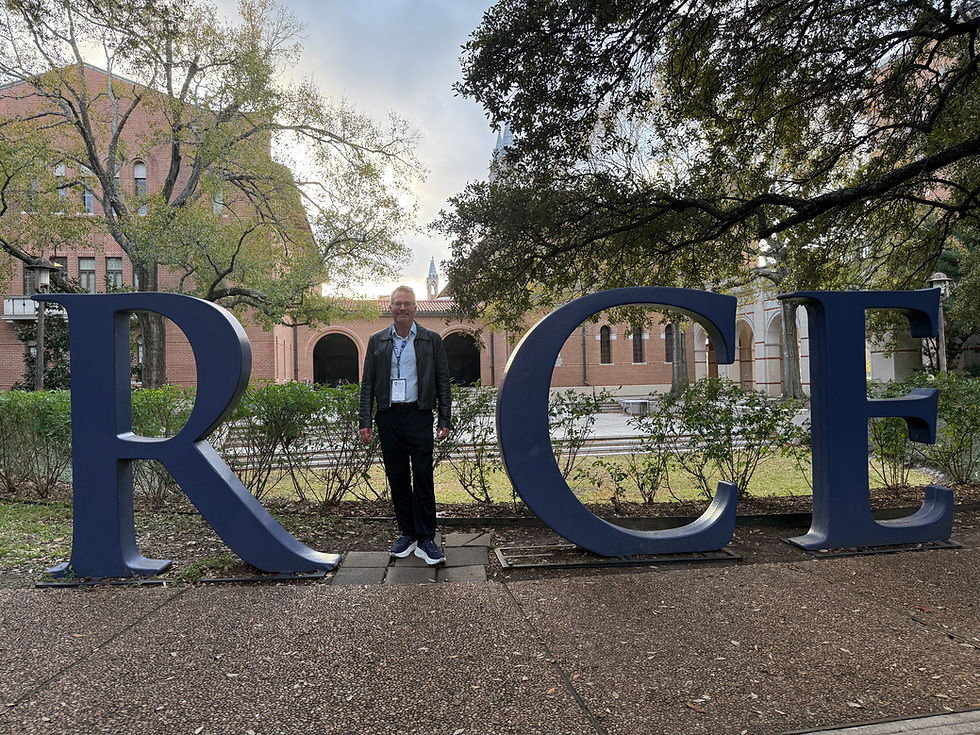
Rice Nice Students
Rice students are:
Smart
Focused
Collaborative
Connected
Economically diverse
Rice staff have strong academic interests in one or more areas. Students talk about how Rice is less competitive in nature than their high schools. They don’t fear collaborating and helping one another. They have deep social connections with one another they form primarily in their residential colleges.
Rice students largely govern themselves. They resolve infractions within their residential college system. Rice students sometimes hold protests, but they submit a schedule to the university for protests to avoid interfering with classes.
Rice students seem to have a healthy balance between academics and life. When I toured in early February, the students did not seem to be either stressed or goofing off.
At many highly selective universities there is a “barbell” distribution of income. Eighty percent of the families might be from wealthy families while about 10 percent are from families that receive SNAP benefits. However, the income distribution of Rice student families is similar to the distribution at the University of Texas in Austin. Read more under Rice affordability.
There are 4,800 undergraduate students at Rice, and the university plans to grow enrollment to 5,200 by 2028 while adding faculty to serve the increase.
Admission to clubs at Rice can be application-based. If there is an application process, there is a six-week training program, and the student can then apply for the club. All of the clubs are open to all students at the university.
Rice Academics
Rice has seven academic undergraduate schools:
Architecture
Business
Engineering & computing
Humanities
Music
Natural science
Social sciences
Rice offers 50 majors across these seven schools.
Rice offers its students a fair amount of attention, thanks in part to its 6:1 student-to-faculty ratio. There is a maximum limit of 150 for classes. Students note that even in a large class, professors are quick to learn their names.
Rice encourages students to participate in “hands on” learning as well as classroom learning. 66 percent of Rice students participate in internships, and 73 percent conduct research. Science research opportunities are relatively easy because the Texas Medical Center, the largest concentration of medical research institutions in the world, is next to Rice’s campus. In addition, Rice has student-run businesses.

Rice’s architecture college is widely considered to be the top undergraduate architecture school in the U.S., and it has an admission rate of just 3.5%. Rice’s Kinesiology major is considered by many to be the best in the U.S.

Rice Admissions
Rice, like most selective universities, reads applications on a holistic basis. The admissions office reviews the entire application in the context of life experiences. These experiences are personal and unique to students, even within same family.
The Rice admissions office evaluates applications to determine how the student will participate in and contribute to the community. There are always at least two people reviewing applications.
Rice admits by school, so applicants will ideally have identified one or more majors that they intend to pursue. STEM and Business applicants should ideally be strong in math. Calculus can be helpful for these applicants in particular.

Rice Essays
Here are some important things to convey in Rice essays:
1. what does the student want to do?
2. how will Rice get them there?
3. who is the student?
4. what will the student bring to the Rice community?
Rice uses essays to get to know students. Students need to write about themselves in the essays and avoid focusing on others. One admissions official said “your grandpa sounds great so we should admit him.”
Admissions officials also cautioned against writing about the same thing repeatedly in essays. If a student writes repeatedly about his struggles with a learning disability, then all the admissions office may know about the student is that a learning disability makes it difficult for him to learn.
Rice Testing
Rice has a test-preferred policy of admitting students. Rice believes that students with a 1350 SAT score are capable of graduating within four years. Of course, that does not mean the score serves as a cutoff for being admitted or denied. A score of 1450 would likely be more helpful for admissions. Students who do not want to submit their test score for formal consideration might consider including it on a resume, assuming that the score is at least 1350.
Rice also looks at AP test scores. Rice is not only happy to see scores of 4 and 5, it also likes to see scores of 3. Ideally, a score of 3 is not in a student’s intended field of study.
Rice Binding Applications
Like many universities, Rice likes to admit students who are compelled to enroll or are highly likely to enroll. Rice intends to admit over half of its class through binding application processes. These binding processes include Early Decision (ED) I, ED II, and the QuestBridge match process, which is for economically disadvantaged students.

Applicants who are from the U.S., but reside outside of Texas tend to “yield” (enroll after being admitted) at a lower rate than Texas residents and international applicants. Those applicants might want to give extra thought to applying to Rice using a binding application process.
Rice Interviews
Applicants can request admission interviews from either an alumnus or an upperclassmen, and about half of the applicants receive them. In order to have a priority to receive an interview, an applicant should request the interview by December 15. Rice tracks requests for interviews.
Rice Transcript Review
When it comes to advanced courses, Rice notes a preference for Advanced Placement (AP) and International Baccalaureate (IB) courses over Dual Enrollment (DE) courses. In addition, Rice does not let a DE course count towards both high school graduation and a college-level course towards a Rice diploma. When it comes to IB course selection, Rice likes to see students taking HL math.
Rice Recommendations
Rice uses recommendation letters to help verify information that it sees elsewhere in the application.
Rice likes to see the following in recommendation letters:
1 counselor letter
2 teacher letters, one of which is in the intended area of study. Consider teachers who are also advisors to clubs in which the student participates.
Supplemental recommendation letters are allowed because they can provide insight outside of the school context. Rice does not want to receive letters from a parent, but is open to letters from other relatives. Rice is open to letters from researchers who partner with students. Those letters need to explain the student’s role in any research.
Rice Box
Rice has an unusual feature in its application – a request for some kind of photo in what it calls a “Rice Box.” This is not a particularly important part of the application, but it can matter. Most students submit photos of themselves. Consider a photo where a student is doing something, such as an extracurricular activity or a science experiment. Some applicants submit photos of things they consider important to them.

Rice Housing: Residential Colleges
The housing system at Rice is central to its culture. Students are randomly assigned to one of 11 residential colleges. Students remain tied to the same residential college while attending Rice. Students’ “friend groups” are typically tied to their residential college. Residential colleges have their own dining halls.

Almost all freshmen choose to reside on campus. Students often live on campus every year except their junior year. During their junior year, students often get a meal plan so they can eat with their friends in their residential college even though they live off campus. About half of seniors return to campus in their senior year when they are likely eligible for a single room. Rice guarantees housing for three years.
Student government structures are within each residential college, which helps provide leadership opportunities. Because students form tight bonds in their residential colleges, there are no social fraternities or sororities on campus.
Rice Affordability
Rice University was free when it first opened, so it has a history of being affordable. About ten percent of students at Rice are admitted through QuestBridge, an admissions process for economically disadvantaged students. Rice was one of four universities who helped initiate the QuestBridge process. While some participating universities only accept one student a year through QuestBridge, Rice recently accepted over 120 through QuestBridge.

Rice provides generous need-based financial aid. The average cost for a student receiving financial aid is about $15 K/year. Students in families with incomes of $200 K to $300 K are still considered for need-based aid awards.
Rice does not provide much merit-based financial aid. Some of the merit-based aid that Rice awards goes to QuestBridge students. Rice awards them merit scholarships partly because their families tend to be very price-sensitive. A small merit award of about $5,000 a year can help them decide to enroll.
Families that pay the full cost will pay about $91.5 K/year.
Educ8Fit Consulting

I work with students and families on the college and graduate school admission process. I help them navigate such complexities as merit aid and international admissions. Please contact Educ8Fit Consulting at either Jim@Educ8Fit.com or College Admission Counseling | Educ8fit Consulting | United States, contact for a free 30-minute consultation.


Comments